Nov 2024
Discovery
Vidext is a company specializing in the development of innovative solutions for visual content and digital design, catering to businesses seeking to strengthen their presence on multimedia platforms. With a strong focus on personalization and quality, Vidext offers tailored design services that adapt to the specific needs of its clients, positioning itself as a strategic partner in their growth.
However, Vidext faces a significant challenge in managing custom design requests submitted by users via email. This current approach presents several issues that impact operational efficiency and the customer experience.
Firstly, the lack of centralization makes it difficult to track and manage requests, as they are not integrated into Vidext’s main platform. This forces the Customer Success team to rely on manual and disjointed workflows. Secondly, delays in communication, caused by the constant forwarding of emails between the Customer Success and design teams, slow down both the reception and execution of requests.
Moreover, this approach is not scalable. As the user base grows, manually handling requests through email becomes increasingly unsustainable, creating an operational bottleneck. This manual process limits the Customer Success team’s ability to focus on higher-value strategic tasks, ultimately affecting the customer experience with longer response times.
In this context, it is essential to rethink how Vidext manages its custom design requests to ensure a more agile, efficient, and scalable service, aligned with users’ expectations.
Project objectives
Design an automated workflow within the platform that allows users to manage custom design requests directly and efficiently, eliminating the need for email communication. This workflow should ensure that requests are automatically received by the design team, accompanied by all the necessary information for their execution. In doing so, the aim is to free the Customer Success team from manually handling these requests, optimizing their time and enabling them to focus on higher-value strategic activities.
The project involves the implementation of a module within the platform that includes:
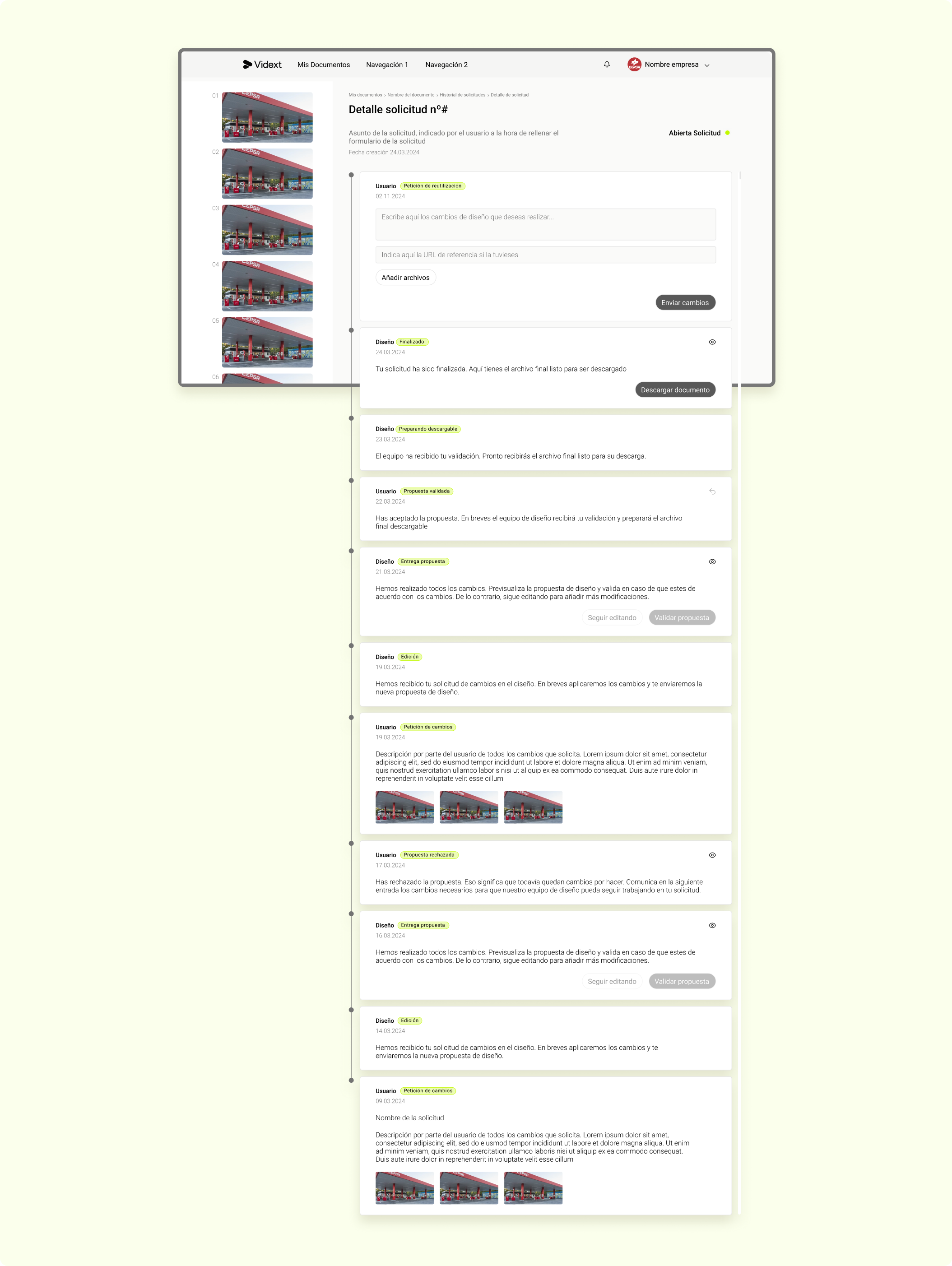
Request Form: Users can complete a form to submit custom design requests tailored to their needs.
Real-Time Tracking: Updated visualization of the request status directly from the platform.
Automatic Notifications: Alerts on any changes to the request status.
Centralized Workflow: Access and delivery of the final design directly within the platform, consolidating the entire process in one environment.
Review and Adjustments: The ability to review, approve, or request modifications to completed designs within the same automated workflow.
Request History: Access to a complete record of previous requests, with options to reuse or modify earlier designs.
Research Desk
Before starting the design process, I conduct a desk or online research with the aim of minimizing research time, as the project needs to be completed within a one-week timeframe.
To achieve this, I explore specialized websites focused on user experience and other platforms to identify different internal communication processes with similar goals to the project’s objectives. This allows me to analyze how these processes have addressed similar challenges and evaluate how their solutions could be applied to the product in question, considering that not all workflows are suitable for every project.
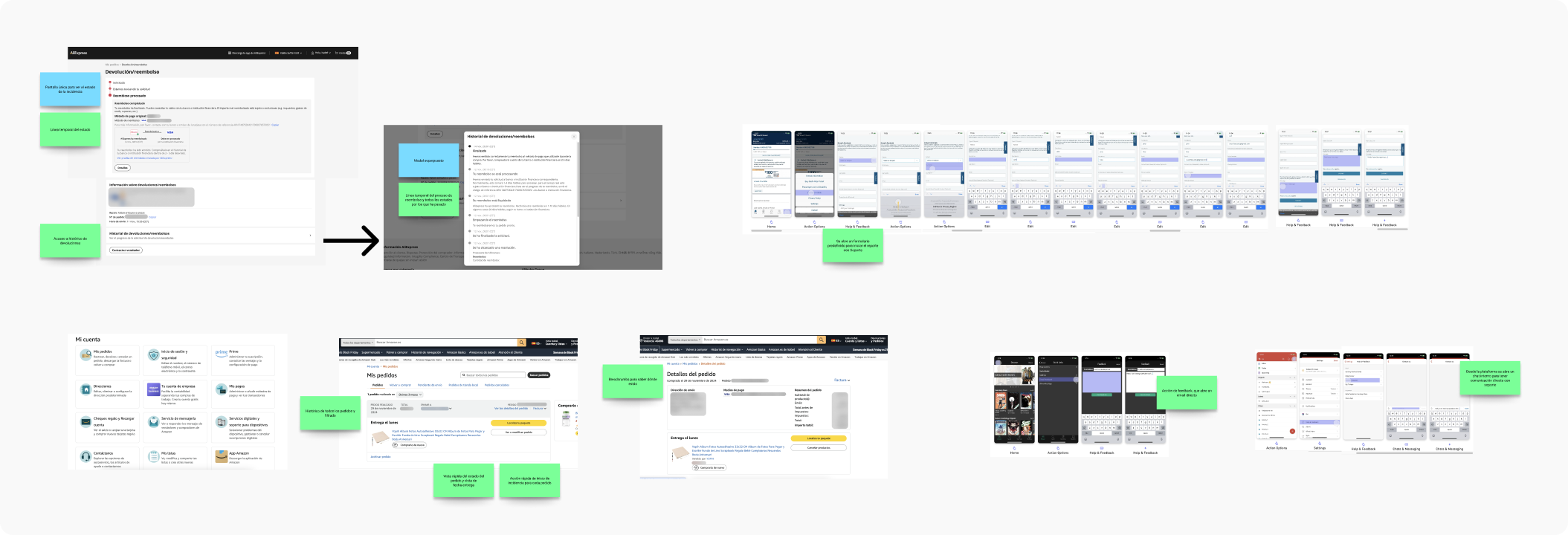
During this process, I examine the various platforms and take note of the most relevant strategic points, as well as those that could genuinely benefit the project’s solution.
Insights
Timeline of the request status always visible
Predefined form
History and filtering of all requests
Quick view of the request/order status
All status messages include information on the next significant date
Internal chat with the relevant department
Early Designs & Iteration
Armed with an understanding of the challenges, I embarked on designing a solution that prioritized process status information and seamless communication.
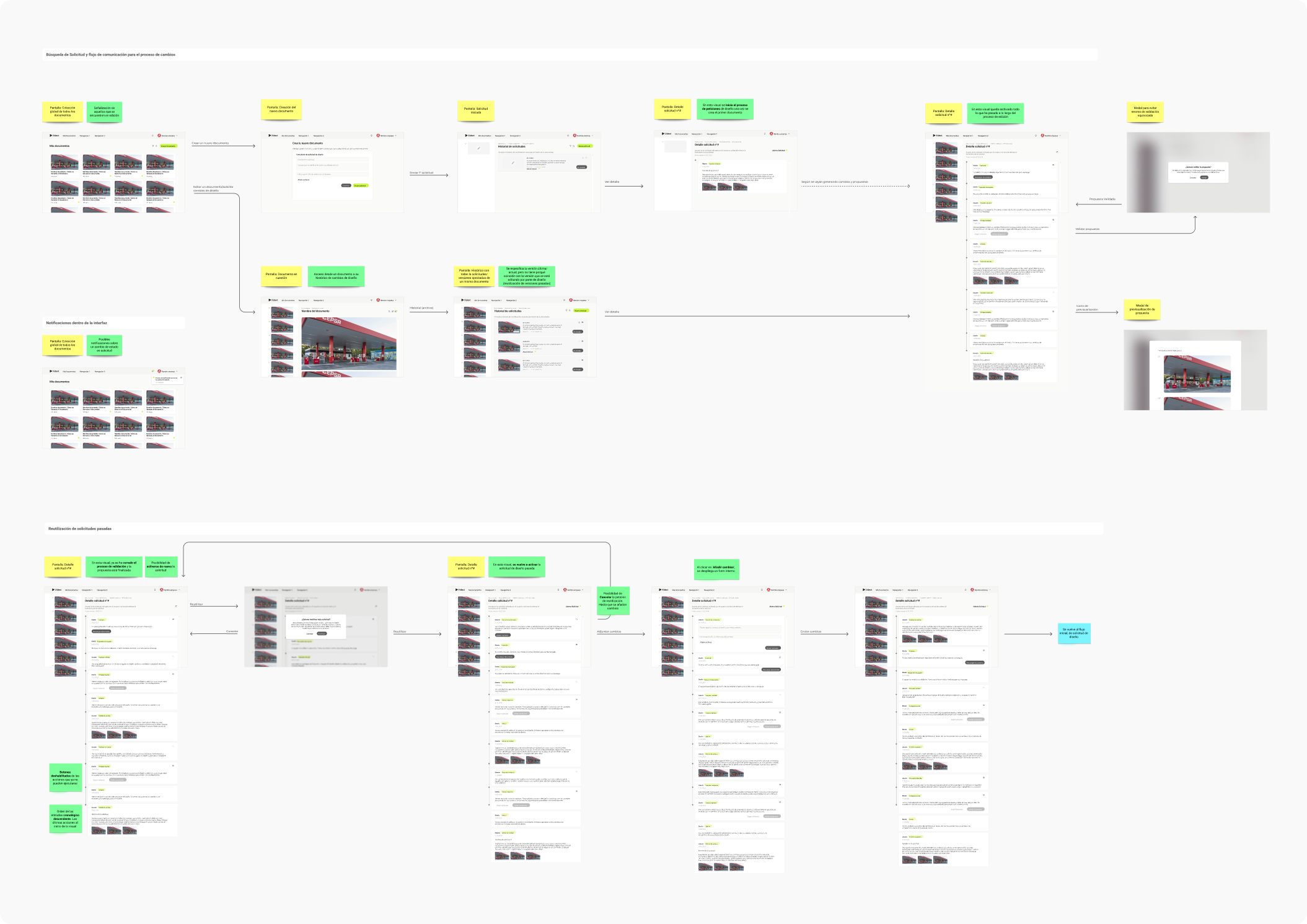
My first step was to identify the user flow that the user would follow to make the design request and break down all the steps they would need to take to achieve it, considering all possible situations. I focused on simplifying the flow and the number of screens while maintaining clarity in the process.
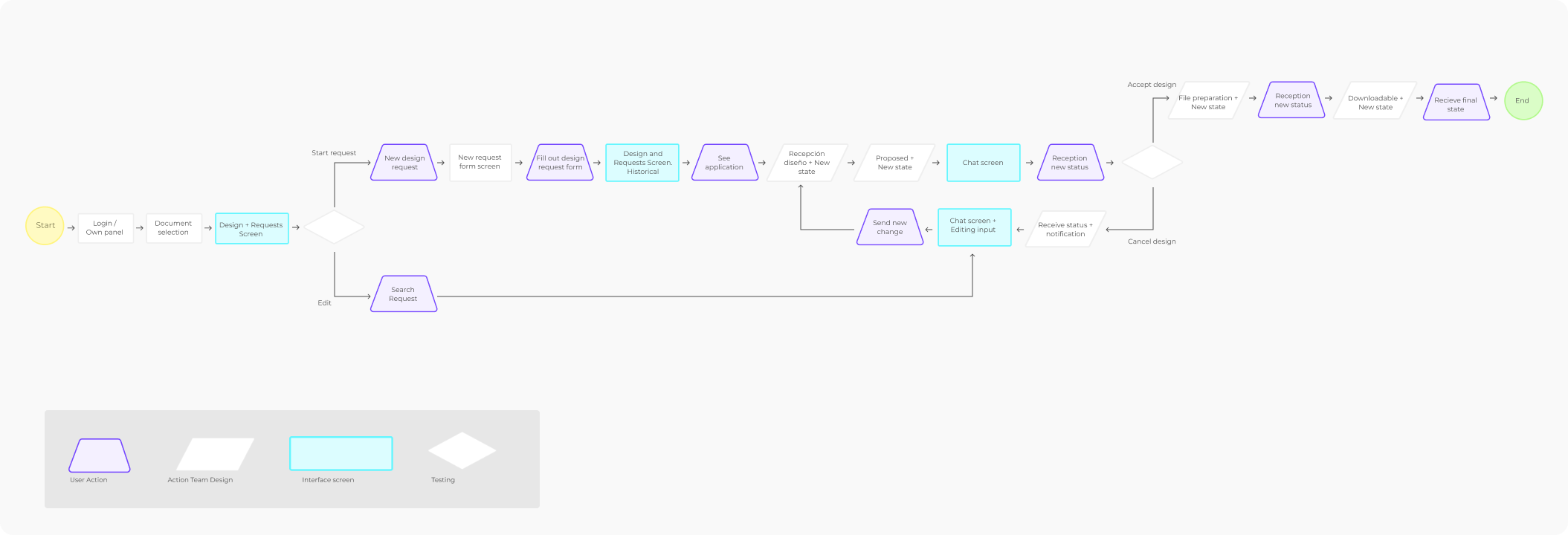
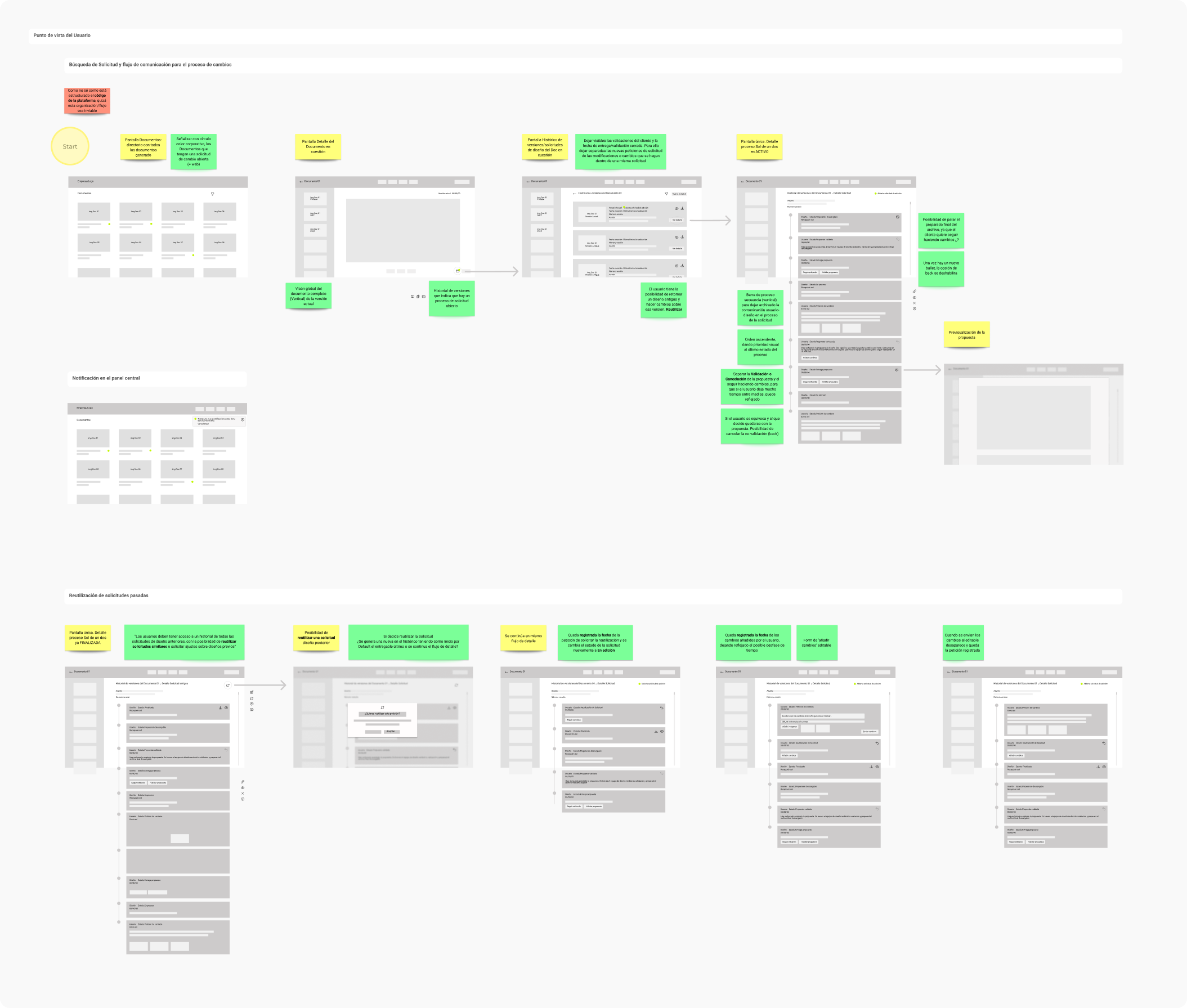
Low-fidelity designs, sketches, and wireframes were explored to conceptualize the new module designe. These early-stage designs lay the groundwork for creating an intuitive and functional user experience.
During the development of the different low-fidelity wireframes, I identified the key points of the product on each screen that would help achieve the different objectives defined in the Discovery phase.
UX writing
I take into account the importance of maintaining a consistent tone of communication throughout each stage of the flow. Therefore, I propose messages that reflect this coherence, both in longer texts and in microcopies used in key elements such as buttons and calls to action.

Ui design
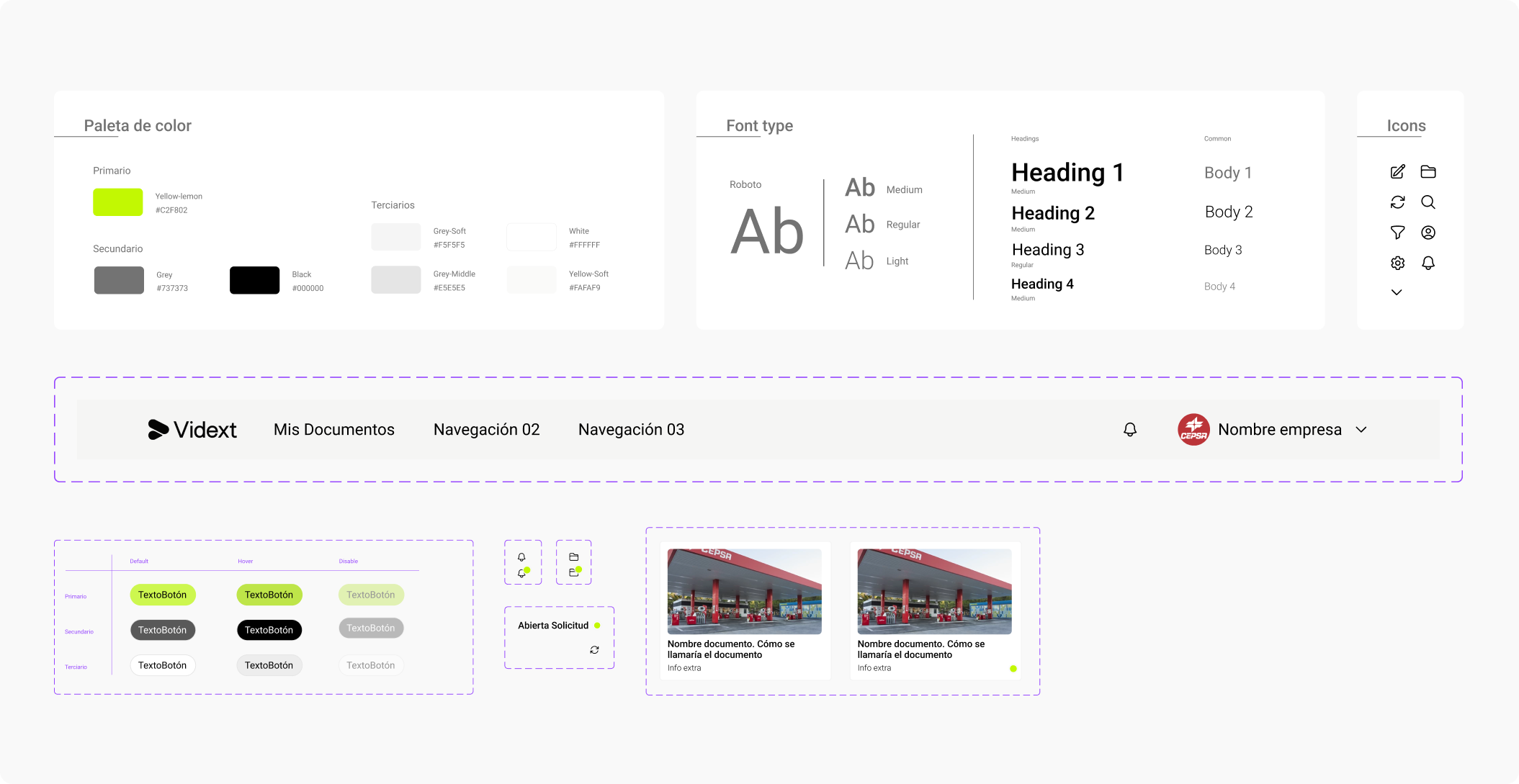
For the development of the final wireframes, I analyze the company's identity and define it within the Figma file I am working on, alongside the rest of the project. Next, I present the brand identity and explain how I have built a small design system in Figma, which I use to work on high-fidelity wireframes and apply the corporate identity consistently.
Brand identity

High-fidelity wireframes
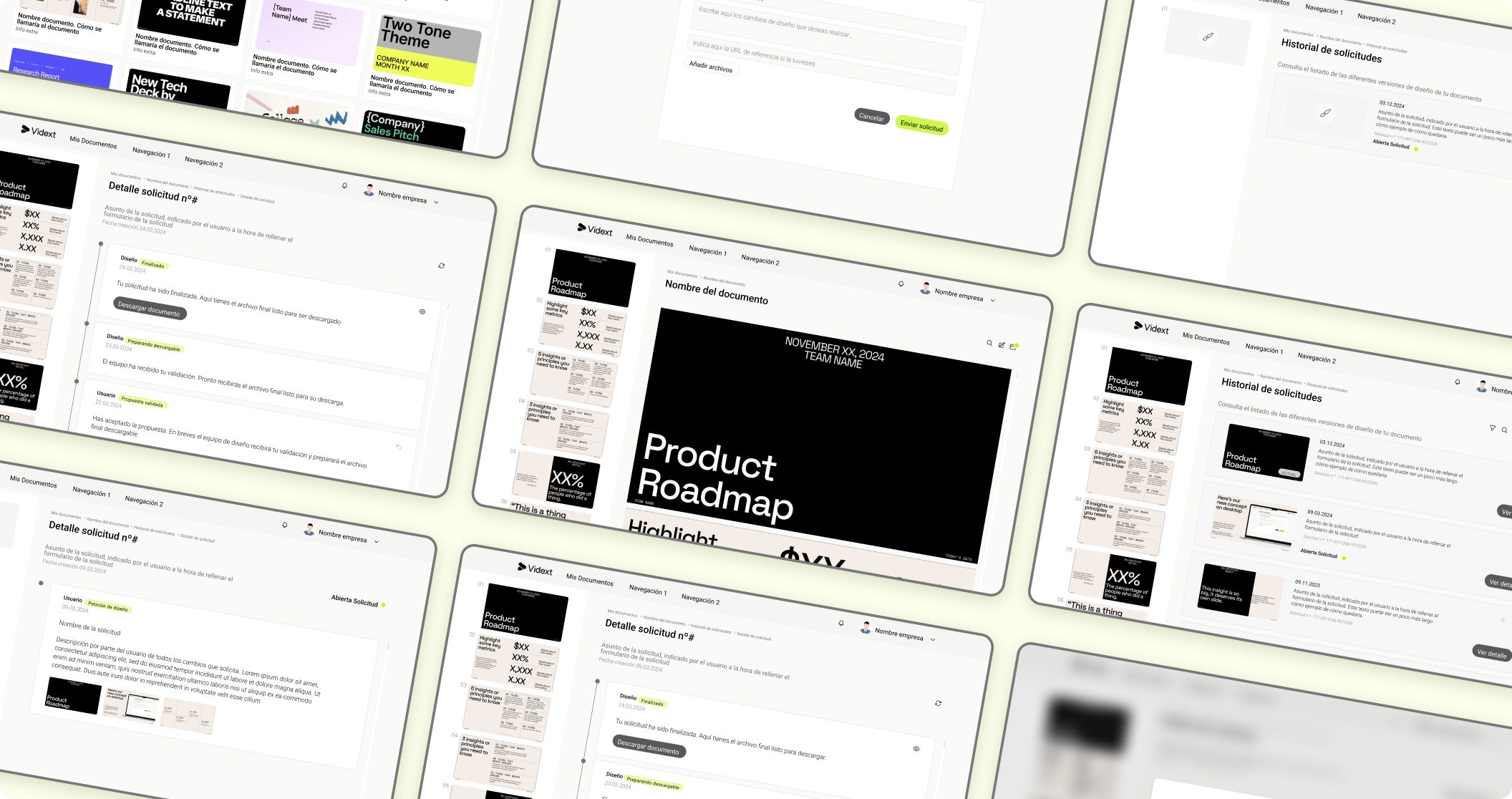
For the client presentation, I continue specifying the key points of the interface where conflicts have been resolved and the screens they correspond to within the application.